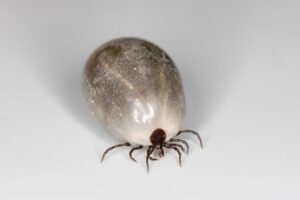
Engorged Tick on a Dog: How to Identify, Remove, and Prevent It.
An engorged tick is a tick that has fed on blood and become enlarged. Use fine-tipped tweezers to grasp it as close to your dog’s skin as possible, then pull upward with steady, even pressure. Do not squeeze the tick’s swollen body, twist it, burn it, or apply petroleum jelly to make it detach. If the tick is in a sensitive location, your dog will not stay still, or there are numerous ticks, contact your veterinarian for assistance.
Key Takeaways: What to Do First
- Identify it: An engorged tick has a rounded, swollen body, unlike the flatter appearance of a recently attached tick.
- Remove it promptly: Use fine-tipped tweezers or a suitable tick-removal tool.
- Avoid home remedies: Never burn the tick or coat it with petroleum jelly, oil, or nail polish.
- Clean the bite: Wash the area and your hands after removal.
- Monitor your dog: Contact your veterinarian if your dog becomes unwell or the bite area worsens.
- Prevent another encounter: Ask your veterinarian about a tick preventive suited to your dog’s age, weight, health, and local tick risks.
Recommended first-aid tool: A fine-tipped tick-removal tweezer or a dedicated tick-removal kit that includes a precision tool. The correct technique matters more than buying an elaborate kit.
What Is an Engorged Tick on a Dog?
An engorged tick is a blood-feeding parasite whose body has expanded as it consumes blood from its host. Ticks attach to a dog’s skin using specialized mouthparts and may remain attached while feeding.
Ticks can be difficult to notice when they first attach, particularly in dogs with thick coats, dark fur, or long hair. As feeding continues, the tick becomes more rounded and easier to feel or see. A markedly swollen tick may resemble a small bean, grape, or grayish balloon attached to the skin.
The degree of swelling varies by tick species, life stage, and feeding progress. Appearance alone cannot establish exactly how long a tick has been attached or whether it carries a disease-causing organism.
Why an engorged tick deserves attention
- Ticks can irritate the skin and leave a bite wound.
- Some species transmit disease-causing organisms to dogs.
- A heavily infested dog may need veterinary treatment rather than individual home removal.
- Ticks brought indoors on pets can also expose people and other animals.
The appropriate response is to remove an accessible tick promptly, assess the bite site, and seek veterinary guidance when the circumstances or your dog’s condition warrant it.
What Does an Engorged Tick Look Like on a Dog?
An engorged tick typically has a visibly enlarged, oval or rounded body. Its color may be gray, pale brown, tan, dark brown, or bluish-gray. Small legs may be visible near the narrower end where the tick attaches to the skin.
Before feeding, many ticks look relatively flat. After feeding, the body expands as it fills with blood. The exact size depends on the species and stage of feeding, so size alone is not a reliable way to identify a tick.
Common visual signs
- Swollen body: The body looks plump rather than flat.
- Attachment point: The tick remains anchored to the dog’s skin.
- Visible legs: Several small legs may be seen close to the skin.
- Localized irritation: The surrounding skin may look pink, red, or mildly swollen.
- Firm, attached appearance: Unlike loose dirt or a scab, a feeding tick remains attached at a defined point.
A tick may be hidden beneath the fur, especially around the ears, collar, armpits, groin, toes, and base of the tail. Part the hair gently and inspect the skin under good lighting.
Engorged tick vs. a skin lump
| Feature | Engorged tick | Possible skin lump |
|---|---|---|
| Appearance | Often rounded, with a distinct body | May be smooth, irregular, or skin-colored |
| Legs | May be visible near the attachment point | No tick legs |
| Connection to skin | Tick mouthparts are attached | The lump is part of the skin or underlying tissue |
| Next step | Remove safely if accessible | Have an uncertain or persistent lump assessed by a veterinarian |
Important: A skin tag, wart, cyst, scab, or other growth can resemble a tick. Do not pull at a lump simply because it looks like a parasite. If you cannot confidently identify it, ask a veterinarian to examine it.
How Long Has an Engorged Tick Been on My Dog?
A swollen tick indicates that feeding has occurred, but its appearance cannot tell you the precise attachment time. Ticks feed at different rates depending on their species, life stage, and other factors.
Some ticks can remain attached for several days. As feeding progresses, the tick generally becomes more rounded. However, you should not use its size as a clock or assume that a tick is harmless because it appears small.
Does an engorged tick mean my dog has a disease?
No. Finding an engorged tick does not automatically mean your dog has contracted a tick-borne disease. The risk depends on factors such as tick species, location, pathogen presence, and how the exposure occurred.
Nevertheless, remove the tick as soon as possible. Prompt removal reduces continued feeding and may reduce the opportunity for transmission, although it cannot guarantee that disease transmission has not occurred.
Tell your veterinarian when you discovered the tick, where it was attached, whether your dog receives tick prevention, and whether any symptoms develop. A photograph of the tick or a properly stored specimen may help with identification.
How to Remove an Engorged Tick From a Dog Safely
If the tick is accessible and your dog can be restrained comfortably, you can often remove it at home. Use good lighting, keep your dog calm, and avoid crushing the tick.
What you will need
- Fine-tipped tweezers or a suitable tick-removal tool.
- Disposable gloves, if available.
- A sealed container for the removed tick if you want your veterinarian to identify it.
- Soap and water or another appropriate means of cleaning the bite site and your hands.
- A second person to gently hold your dog if necessary.
Step 1: Calm your dog and expose the tick
Move to a well-lit area. Have another adult gently hold your dog if needed. Part the fur around the tick so you can see where its mouthparts enter the skin.
Do not proceed if your dog is panicking, snapping, or struggling so much that removal could injure either of you. A veterinary professional can remove a difficult tick more safely.
Step 2: Put on gloves and position the tool
Wear disposable gloves if possible. Hold fine-tipped tweezers close to the skin and grip the tick as near to its mouthparts as you can.
Avoid pinching the swollen abdomen. Squeezing the body may damage the tick and increase exposure to its contents.
Step 3: Pull steadily
Pull upward with steady, even pressure. Do not jerk, crush, or twist the tick when using tweezers. Continue controlled pressure rather than repeatedly tugging at it.
If you are using a dedicated tick-removal device, follow the manufacturer’s directions for that specific tool. Stop if the tool cannot be positioned correctly or if you are damaging the surrounding skin.
Step 4: Check the removal site
Look at the skin after the tick has been removed. The area may have a small puncture, mild redness, or slight swelling.
If a small dark fragment appears to remain embedded, it may be a mouthpart, but it can be difficult to tell by appearance alone. If it cannot be removed easily with clean tweezers, do not dig into the skin. Keep the area clean and contact your veterinarian if irritation develops or you are unsure what remains.
Step 5: Clean the bite area and your hands
Clean the bite site appropriately and wash your hands thoroughly. Clean the removal tool before storing it. Avoid picking at the wound or applying unapproved chemicals or human medications.
Step 6: Dispose of or preserve the tick
Place the tick in a sealed container or another secure method recommended by your veterinarian. A labeled container with the date of removal can be useful if identification is needed. Wash your hands afterward.
Do not crush a tick with your bare fingers. Ask your veterinarian whether the specimen would be useful for identification. Routine testing of an individual tick is not always recommended and should not replace clinical assessment of a sick dog.
Never Use These Tick-Removal Tricks
- Petroleum jelly or oil: These are not reliable methods for making an attached tick detach safely.
- Heat or a hot match: This can burn your dog and is not a safe removal technique.
- Nail polish or solvents: These do not replace prompt mechanical removal.
- Crushing the tick’s body: Avoid squeezing the engorged abdomen.
- Digging into the skin: Do not cut or probe the bite to retrieve a fragment.
The recommended approach is to remove the tick promptly with a suitable tool and steady pressure.
What If the Tick’s Head Is Still in My Dog’s Skin?
After removing a tick, you may notice a small dark spot at the attachment site. It is not always possible to determine whether this is a retained mouthpart, a small scab, or ordinary skin debris.
If a mouthpart fragment remains and can be grasped easily with clean tweezers, it may be removed carefully. Do not dig into the skin in an attempt to extract a tiny fragment that will not come away readily.
Keep the area clean and monitor it. Contact your veterinarian if swelling increases, the site becomes painful, discharge develops, or the wound does not improve.
Signs Your Dog May Need Veterinary Attention
Many dogs remain well after a tick bite, but some develop local skin problems or tick-borne illness. Signs may not appear immediately, so continue monitoring your dog after removal.
Contact your veterinarian promptly if you notice:
- Unusual tiredness, weakness, or a marked change in normal behavior.
- Reduced appetite or refusal to eat.
- Fever or a generally unwell appearance.
- Lameness, stiffness, or swollen joints.
- Vomiting or other persistent gastrointestinal symptoms.
- Dark or discolored urine, pale gums, or unusual bruising.
- Increasing redness, pain, swelling, or discharge at the bite site.
When is it an emergency?
Seek emergency veterinary care if your dog collapses, has difficulty breathing, develops severe weakness, cannot stand normally, has seizures, or shows other signs of a potentially life-threatening problem. Do not wait to see whether these symptoms resolve on their own.
Ticks can be associated with several diseases, including ehrlichiosis, anaplasmosis, babesiosis, and Lyme disease in regions where the relevant pathogens and tick species occur. The risk varies geographically. A veterinarian can advise which illnesses are relevant to your dog’s exposure and whether testing or treatment is appropriate.
Do not give human medications, leftover antibiotics, or other treatments without veterinary direction.
What Happens After You Remove an Engorged Tick?
Removing the tick is an important first step, but it does not guarantee that no infection has occurred. A dog can appear normal initially and develop signs later, depending on the tick and any transmitted organism.
Monitor the bite site
Check the area over the following days for worsening redness, swelling, tenderness, discharge, or a persistent lump. A small amount of irritation may occur, but worsening symptoms deserve veterinary advice.
Monitor your dog’s overall health
Pay attention to appetite, energy, walking, urination, and behavior. Contact your veterinarian if your dog becomes unwell, even if the tick has already been removed.
Ask whether disease testing is appropriate
Your veterinarian may recommend observation, examination, or diagnostic testing based on the exposure, symptoms, region, and timing. Testing immediately after a bite may not detect every early infection, so follow the veterinarian’s advice about whether and when follow-up testing is useful.
Do not assume a tick is infected solely because it was engorged, and do not assume a dog is disease-free simply because the tick was removed intact.
Five Useful Amazon Products for Dog Tick Removal and Inspection
The following products serve different purposes. Removal tools help with an attached tick, while grooming and inspection tools can help you find ticks before they become heavily engorged. These are practical product candidates for this article, not a claim that all have been clinically tested or that any tool prevents disease.
1. TickCheck Premium Tick Remover Kit
Best use: A dedicated tick-removal kit for home or travel.
This kit has been described as including a removal tool, fine-tip tweezers, a carrying case, and a tick identification card. Verify the current package contents before buying.
Pros
- Provides more than one removal option.
- Compact format is convenient for a pet first-aid kit.
- An identification card can help with preliminary visual comparison.
Cons
- Specialized tools still require correct technique.
- A tool may be awkward to position through dense fur.
- A tick identification card cannot confirm whether a tick carries a pathogen.
2. The Original Tick Key
Best use: A small, portable tick-removal tool for outdoor outings.
A key-style remover can be convenient to carry in a walking bag. Check that its slot fits the tick and can be positioned close to the skin without trapping the dog’s hair.
Pros
- Lightweight and portable.
- Useful as a dedicated tool for outdoor trips.
- Does not depend on applying chemicals to the tick.
Cons
- May be difficult to use on very small ticks or thick fur.
- Requires correct positioning and controlled removal.
- Should not replace fine-tipped tweezers when these are more suitable.
3. Tweezerman Pet Flea Comb
Best use: Routine coat inspection and grooming.
A fine-toothed pet comb can help separate hair and reveal small parasites or debris. Use it gently, especially around sensitive skin. A comb is an inspection aid, not a substitute for tweezers when a tick is attached.
Pros
- Supports regular grooming and coat checks.
- Can help reveal small parasites hidden in fur.
- Useful for dogs whose coats make visual inspection difficult.
Cons
- Does not reliably remove an embedded tick.
- May be less practical on matted or very dense coats.
- Requires careful use to avoid pulling hair or irritating skin.
4. TickCheck Tick Remover Value 3 Pack
Best use: Keeping removal tools in more than one location.
A multipack can be useful for storing one tool at home, one in a travel kit, and another with outdoor supplies. Confirm the current set contents and instructions before purchase.
Pros
- Convenient to keep tools in separate locations.
- Designed specifically for tick removal.
- May be a practical option for households with multiple pets.
Cons
- Multiple tools do not guarantee better removal technique.
- Individual tools may not suit every tick size or attachment location.
- Tools should be cleaned and stored properly after use.
5. Fine-Tipped Stainless-Steel Tweezers
Best use: Precise removal when a tick is attached close to the skin.
Fine-tipped tweezers are a straightforward first-aid essential. Choose a pair with aligned tips that can grip close to the attachment point. A general-purpose pair is not automatically suitable if its tips are blunt or poorly aligned.
Pros
- Suitable for carefully gripping near the tick’s mouthparts.
- Useful for other basic first-aid tasks when appropriate.
- Easy to clean and store in a dedicated kit.
Cons
- Blunt tips may squeeze the tick’s swollen body.
- Small ticks can be difficult to grip without practice.
- Removal may be unsafe if the dog is moving or the tick is in a sensitive area.
Our practical recommendation: Start with a suitable fine-tipped tweezer or a reputable tick-removal kit. Buy a grooming comb if it suits your dog’s coat, but do not rely on grooming tools to remove a tick that is firmly attached.
How to Prevent Engorged Ticks on Dogs
The most effective approach combines routine inspection, appropriate tick prevention, and awareness of the environments your dog visits. No single measure guarantees that a dog will never encounter a tick.
1. Check your dog regularly
Inspect your dog after outdoor activities and perform frequent, ideally daily, tick checks. Pay particular attention to:
- Inside and around the ears.
- Around the eyelids and muzzle.
- Under the collar.
- Under the front legs and around the armpits.
- Between the toes and around the paw pads.
- Between the back legs and around the groin.
- Under the tail and around the tail base.
Use your fingers to feel for small bumps while parting the coat. Check long-haired and dark-coated dogs carefully because ticks can be harder to see.
2. Discuss tick preventives with your veterinarian
Veterinary-approved tick prevention may include oral medications, topical treatments, or collars, depending on the product and your dog’s circumstances. The right option depends on age, weight, medical history, other medications, household pets, and the tick species present in your area.
Follow the product label and your veterinarian’s directions. Never use a dog-only product on a cat, and never assume that a product labeled for fleas also controls every tick species.
3. Reduce exposure where possible
Keep grass and vegetation managed around frequently used outdoor spaces. Where local tick risks warrant it, avoid dense brush and tall grass, and check your dog after walks in potentially tick-infested areas.
Remember that ticks may also be brought indoors. If you find numerous ticks on your dog or repeatedly discover them inside the home, seek veterinary advice about pet treatment and, if necessary, professional pest management.
4. Keep prevention consistent
Follow the correct dosing or replacement schedule for the specific preventive. Missed doses, incorrect weight ranges, and inappropriate products can leave gaps in protection.
The Companion Animal Parasite Council recommends year-round tick control for dogs in its guidance for North America. Your veterinarian can help determine the appropriate approach for your location and circumstances.
Common Mistakes to Avoid After Finding an Engorged Tick
- Waiting for the tick to fall off: Remove an accessible attached tick promptly rather than waiting for it to detach naturally.
- Guessing the attachment time: A tick’s size does not reliably reveal the exact duration of feeding.
- Assuming removal eliminates all risk: Continue monitoring your dog and follow veterinary guidance.
- Using the wrong product: Never apply an insecticide or medication without checking that it is appropriate for your dog.
- Ignoring multiple ticks: A heavy infestation requires prompt veterinary advice.
- Assuming a skin lump is a tick: If you cannot identify the object confidently, have it examined.
- Forgetting other pets and people: Check other household animals and take care when handling the removed tick.
See more: Tick Bite Symptoms on Dogs: How to Recognize a Bite and When to Worry
Frequently Asked Questions
1. Should I remove an engorged tick from my dog immediately?
Yes, if you can access it safely. Prompt removal reduces continued feeding and may reduce exposure to pathogens. Use fine-tipped tweezers or a suitable tick-removal tool and avoid squeezing the body. If you cannot remove it safely, contact your veterinarian.
2. Does a swollen tick mean it has been on my dog for days?
It indicates that the tick has fed, but you cannot reliably calculate the attachment time from swelling alone. Feeding rates vary by species and life stage.
3. Can an engorged tick kill my dog?
Not every tick bite causes illness, and many dogs remain well after removal. However, ticks can transmit serious diseases, and severe infestations may cause significant problems. Seek veterinary advice if your dog has multiple ticks or develops concerning symptoms.
4. What if I accidentally squeeze the tick?
Stop squeezing it and remove it using a suitable tool if you can do so safely. Clean the bite area and your hands afterward. If the tick ruptures, or you are concerned about exposure or incomplete removal, contact your veterinarian for advice.
5. What should I do if the tick’s head remains in the skin?
Do not dig into the skin. If a visible fragment can be removed easily with clean tweezers, you may carefully remove it. Otherwise, leave it alone, keep the area clean, and contact your veterinarian if irritation worsens or you are unsure what remains.
6. Should I take my dog to the vet after every tick bite?
Not every uncomplicated tick bite requires an emergency visit. However, veterinary advice is especially important when the tick cannot be removed safely, there are many ticks, your dog has health problems, or symptoms develop. Ask your veterinarian whether local disease risks warrant further assessment.
7. Can a tick bite cause a lump after the tick is removed?
Yes. Local irritation can cause a small bump or redness after removal. Monitor the area, avoid squeezing it, and seek veterinary assessment if the lump grows, becomes painful, produces discharge, or does not improve.
8. Should I test the tick for disease?
Tick identification may help your veterinarian assess potential exposure, but testing an individual tick does not establish whether your dog is infected. A negative result cannot rule out exposure to another tick or a pathogen not detected by the test. Follow your veterinarian’s recommendations for clinical assessment and any appropriate testing.
9. How can I stop ticks from becoming engorged on my dog?
Use a veterinarian-recommended tick preventive appropriate for your dog, follow the dosing schedule, and inspect the coat regularly. Prevention reduces risk but does not eliminate the need for tick checks.
10. Can an engorged tick fall off by itself?
Some ticks detach after feeding, but you should not wait for an attached tick to fall off. Remove it promptly using an appropriate technique or seek veterinary help if removal is difficult.
Conclusion
An engorged tick on a dog is a blood-fed parasite that often appears as a rounded, swollen body attached to the skin. Although finding one does not automatically mean your dog is infected, it is important to remove it promptly and correctly.
Use fine-tipped tweezers or an appropriate tick-removal tool, avoid harmful home remedies, clean the bite site, and watch for changes in your dog’s health. Contact your veterinarian if removal is difficult, multiple ticks are present, or symptoms develop.
Routine coat checks and a consistent, veterinarian-recommended prevention plan are the most practical ways to reduce future tick encounters.
Extended Reading List for Dog Moms and Dads.
Recent Content
Tick Bite Symptoms on Dogs: How to Recognize a Bite and When to Worry
Seeing a tick on your dog can be worrying, especially if you notice a swollen bump, redness, or changes in your pet's behavior. The important thing to know is that a tick bite does not...
Teaching a dog recall means teaching them to return to you when you call. A reliable recall makes everyday life easier and can help you move your dog away from a hazard, end a play session safely, or...