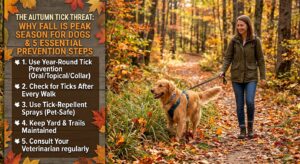
The Autumn Tick Threat: Why Fall Is Peak Season for Dogs & 5 Essential Prevention Steps.
The safest approach is straightforward: keep your dog’s veterinarian-recommended tick prevention up to date, check your dog after outdoor activities, remove attached ticks promptly, and make your yard less inviting to ticks. These five practical steps can help protect your dog throughout autumn and beyond.
Key Takeaways: Protect Your Dog This Fall
- Ticks can remain active during fall and mild winter weather.
- Use veterinarian-recommended tick prevention consistently throughout the year.
- Check your dog’s ears, collar area, armpits, paws, groin, and tail after outdoor activities.
- Remove attached ticks with fine-tipped tweezers or an appropriate tick-removal tool.
- Contact your veterinarian if your dog develops concerning symptoms after possible tick exposure.
Recommended essential tool: Keep a fine-tipped tick-removal kit in your pet first-aid supplies. A removal tool complements preventive medication; it does not replace it.
Why Can Fall Be a Risky Season for Ticks?
Ticks do not all behave alike. Different species have different activity patterns, and some remain active whenever conditions are suitable. A cool morning or a calendar date in October does not automatically mean that your dog is safe from tick bites.
1. Some ticks remain active in cooler weather
In many parts of the eastern and central United States, adult black-legged ticks (Ixodes scapularis) are especially relevant during fall and cooler months. Other species, including lone star ticks and American dog ticks, have different regional and seasonal patterns.
Tick activity varies across the country. A dog hiking in the Northeast may encounter a different combination of species and risks from a dog walking through a dry area of the Southwest. Local veterinary advice is therefore more useful than relying on a nationwide calendar alone.
2. Leaf litter and woodland edges provide hiding places
Ticks commonly occur in vegetation, wooded areas, tall grass, brush, and leaf litter. Fallen leaves can provide a sheltered microhabitat that helps some ticks avoid drying out.
Dogs may brush against vegetation while investigating a trail, sniffing beneath shrubs, or exploring the edge of a yard. Ticks can then crawl through the coat and find a suitable place to attach.
3. Wildlife can help maintain tick populations
Depending on the tick species and its life stage, wildlife such as rodents, birds, and deer can serve as hosts. Properties near wooded areas or wildlife corridors may provide suitable conditions for ticks to persist.
This does not mean that every yard with trees contains dangerous numbers of ticks. It means that vegetation, wildlife activity, and local environmental conditions should be considered when planning prevention.
4. Dogs can bring ticks indoors
A tick may travel into your home on your dog’s coat, even if it has not yet attached. Certain species, particularly the brown dog tick, can infest indoor environments and kennels.
Regular checks and effective prevention help reduce the chance of ticks entering your home and finding another host, including a person or another pet.
What Diseases Can Ticks Transmit to Dogs?
Not every tick bite causes disease, but some ticks carry organisms that can make dogs seriously ill. The diseases of concern depend on the tick species and the region where exposure occurs.
- Lyme disease: Associated with certain black-legged ticks. Dogs may develop fever, lethargy, joint discomfort, or lameness.
- Ehrlichiosis: A tick-borne infection that can cause fever, reduced appetite, lethargy, and abnormalities in blood cells.
- Anaplasmosis: May cause fever, lethargy, reduced appetite, joint pain, or other signs.
- Rocky Mountain spotted fever: A potentially serious tick-borne disease that can affect dogs and people.
These conditions can have overlapping signs, and some infected dogs initially appear normal. Symptoms alone cannot establish which disease, if any, is present. A veterinarian may recommend examination and appropriate testing based on exposure, symptoms, and local disease risks.
Do not assume that a dog is free from infection simply because the tick was removed quickly or the bite looks harmless. Prompt removal is important, but it cannot guarantee that disease transmission did not occur.
5 Essential Steps to Prevent Ticks on Dogs in Autumn
Step 1: Keep your dog’s tick prevention up to date
Consistent prevention is the foundation of tick control. Veterinary parasite experts recommend year-round tick protection because activity can continue outside the traditional spring and summer seasons.
Depending on your dog’s circumstances and the product selected, prevention may involve an oral medication, a topical treatment, or a tick-control collar. Products differ in the tick species they target, their duration, whether they repel or kill ticks, and whether they require a prescription.
Ask your veterinarian which option fits your dog’s age, weight, health history, lifestyle, and local tick risks. Follow the product label carefully, including dosing intervals and restrictions for puppies or dogs with specific medical histories.
- Record the next due date so you do not miss a dose or application.
- Do not combine tick products unless your veterinarian confirms the combination is appropriate.
- Tell your veterinarian if your dog has a history of seizures or other relevant health concerns before selecting a medication.
- Use only products labeled for dogs and the correct weight range.
Important: Some dog tick products contain ingredients that are highly toxic to cats. If you have cats at home, check the label and ask your veterinarian how to prevent accidental exposure.
Step 2: Check your dog after every outdoor adventure.
Important read: How to Identify 8 Most Common Types of Ticks on Dogs.
A daily tick check is a practical habit, especially after walks through woods, tall grass, brush, parks, or areas with leaf litter. A quick inspection can help you find ticks before they remain attached for longer.
Use your fingers to feel gently through the coat, then separate the hair to inspect the skin in good lighting. Ticks can be tiny, and a thick or dark coat may make them difficult to see.
Pay particular attention to these areas:
- Ears: Examine around the ear flaps and the outside of the ear openings.
- Eyes and muzzle: Check around the eyelids, cheeks, and lips without getting tools into the eyes.
- Under the collar: Remove the collar temporarily to inspect the skin underneath.
- Armpits and groin: Separate the coat and check the skin folds.
- Paws: Inspect between the toes and around the footpads.
- Tail and rear end: Check around the base of the tail and beneath the tail.
Brushes and fine-toothed combs can help you inspect some coats, but they cannot reliably remove an attached tick. Use a suitable removal tool when you find one attached to the skin.
Step 3: Remove attached ticks promptly and correctly
If you find an attached tick, remove it as soon as practical. Do not wait for it to fall off or attempt to make it detach using household substances.
How to remove a tick safely
- Keep your dog calm and ask another adult to help hold the dog still if needed.
- Wear disposable gloves if available.
- Use clean, fine-tipped tweezers or a commercial tick-removal device appropriate for the tick’s size.
- With tweezers, grasp the tick as close to the skin as possible without squeezing its body.
- Pull steadily away from the skin. Avoid twisting, jerking, or crushing the tick.
- After removal, clean the bite area and your hands. Dispose of the tick securely or retain it in a sealed container if your veterinarian requests identification.
- Inspect the rest of your dog for additional ticks.
If the tick’s mouthparts appear to remain in the skin, avoid digging into the skin with a needle or blade. Ask your veterinarian for guidance, particularly if the area becomes swollen, painful, or inflamed.
What not to do
- Do not burn the tick or apply a hot match.
- Do not coat it with petroleum jelly, nail polish, or oils in an attempt to make it detach.
- Do not squeeze or crush the tick’s swollen body.
- Do not apply household insecticides or human medications to the bite.
If your dog will not stay still, the tick is in a sensitive location, or you cannot remove it confidently, contact your veterinary clinic.
Do you Tick Repellant Sprays? Safest Tick Repellents for Dogs
Step 4: Make your yard less attractive to ticks
Reducing suitable tick habitat around your home can complement prevention on your dog. You do not need to eliminate every leaf or turn your garden into a bare space. Focus on the areas where people and pets spend time.
- Keep grass reasonably short around play areas, paths, and frequently used parts of the yard.
- Remove accumulated leaf litter and brush from areas where your dog regularly rests or plays.
- Trim overgrown vegetation along paths, fences, and the edges of lawns.
- Keep outdoor pet resting areas clean and inspect kennels, bedding, and shaded spaces.
- Discourage wildlife from feeding near the home by securing rubbish and avoiding practices that attract unwanted animals.
Ticks may persist even in a well-maintained yard, particularly where wildlife visits or nearby vegetation provides suitable habitat. Yard maintenance reduces some opportunities for exposure but is not a substitute for preventive treatment.
If you find repeated tick infestations inside your home or kennel, consult a licensed pest-control professional familiar with tick management. Use environmental pesticides only according to their labels and keep pets away as directed.
Step 5: Recognize possible signs of tick-borne illness
Keep observing your dog after a suspected tick bite. Signs of a tick-borne disease may take days or longer to appear, and a dog may not become visibly ill immediately after exposure.
Contact your veterinarian if you notice:
- Unusual tiredness or weakness.
- Loss of appetite.
- Fever or a change in normal behavior.
- Joint discomfort, stiffness, or unexplained lameness.
- Swollen joints or enlarged lymph nodes.
- Unusual bruising, bleeding, or pale gums.
Seek urgent veterinary care for severe weakness, collapse, difficulty breathing, seizures, significant bleeding, or other sudden and serious symptoms.
When contacting the clinic, explain when you noticed the tick, where your dog may have encountered it, whether prevention is current, and any symptoms you have observed. Do not wait for symptoms to become severe before seeking advice.
5 Products to Consider for Your Autumn Tick-Prevention Kit
The following products represent different parts of a practical tick-care routine. They are options to investigate, not a ranking based on independent testing. Check current Amazon listings, product labels, availability, and suitability for your dog before purchasing.
1. TickCheck Premium Dog Tick Removal Kit
Best for: Keeping a dedicated tick-removal kit at home or in a walking bag.
A tick-removal kit can provide purpose-made tools for handling ticks of different sizes. Use the tool according to its instructions and make sure it allows you to remove the tick without squeezing its body.
Find TickCheck tick-removal kits on Amazon
2. Fine-Tipped Tick Tweezers
Best for: Precise removal when a tick is attached close to the skin.
Fine-tipped tweezers are a useful basic tool for grasping a tick close to the skin. Keep them clean and reserve them for careful tick removal rather than squeezing the tick’s body.
Find fine-tipped tick tweezers on Amazon
3. Tweezerman Pet Flea Comb
Best for: Helping inspect suitable coat types during routine grooming.
A fine-toothed pet comb may help separate hair and reveal small parasites during an inspection. It is a supplementary grooming tool, not a replacement for a proper tick check or an attached-tick removal tool.
Find the Tweezerman Pet Flea Comb on Amazon
4. Frontline Plus for Dogs
Best for: Owners researching a topical flea-and-tick preventive.
Frontline Plus is a topical product for dogs. Before buying, confirm that the formulation is intended for your dog’s species, age, and weight and that its labeled tick coverage matches your needs. Ask your veterinarian whether it is appropriate for your dog’s circumstances.
Check Frontline Plus listings on Amazon
5. Seresto Flea and Tick Collar for Dogs
Best for: Owners comparing collar-based parasite prevention.
Seresto is a flea-and-tick collar option. Check the current product label, the appropriate dog size, duration of protection, precautions, and local availability. A collar should not automatically be combined with another tick preventive without veterinary guidance.
Check Seresto collar listings on Amazon
Our practical recommendation: Start with a reliable tick-removal kit for your first-aid supplies, then ask your veterinarian to select the preventive best suited to your dog. Removal tools help you respond to a tick; a suitable preventive helps manage the risk of future infestations.
What If You Keep Finding Ticks on a Protected Dog?
Finding a tick does not automatically mean that a preventive has failed. Some products kill ticks after attachment, while others have repellent effects. Product performance, application errors, heavy environmental exposure, and the tick species involved can all affect what you observe.
If ticks continue appearing:
- Confirm that the preventive was administered or applied on schedule.
- Check the product label for the tick species it covers and how it works.
- Do not give an extra dose or combine products without veterinary advice.
- Review the dog’s usual walking routes and the condition of your yard.
- Ask your veterinarian whether a different product or additional environmental control is warranted.
If you suspect a household infestation, especially with repeated brown dog ticks, seek professional pest-management advice. Established indoor infestations may require coordinated treatment of the environment and pets.
Frequently Asked Questions About Fall Ticks on Dogs
Are ticks worse in fall than in summer?
It depends on the species and location. Some ticks remain highly active in fall, and adult black-legged ticks are an important concern in parts of the United States during cooler months. Other ticks may be more active in different seasons. Continue prevention according to your veterinarian’s advice.
Can dogs get ticks in October and November?
Yes. Ticks can remain active during autumn, particularly when weather and habitat conditions are suitable. Mild winter weather can also permit activity. Do not discontinue prevention solely because summer has ended.
Should I stop tick prevention when the weather gets cold?
Generally, year-round protection is recommended by veterinary parasite experts. The appropriate product and schedule depend on your dog and local risks. Speak with your veterinarian before changing or stopping a preventive.
Where should I check my dog for ticks?
Check in and around the ears, around the eyes, under the collar, beneath the front legs, between the toes, around the groin, and under and around the tail. Examine the entire coat after outdoor activities.
What is the safest way to remove a tick from a dog?
Use fine-tipped tweezers or an appropriate commercial tick-removal device. With tweezers, grasp close to the skin and pull steadily without twisting, jerking, or crushing the tick. Contact your veterinarian if removal is difficult or the site becomes inflamed.
Can a tick bite make my dog sick even if I remove the tick?
Yes. Prompt removal helps reduce risk but cannot guarantee that disease transmission has not occurred. Watch for changes in appetite, energy, movement, or other signs and contact your veterinarian if you have concerns.
Can ticks live inside a house?
Yes. Brown dog ticks can infest homes and kennels. Repeated sightings indoors may require professional assessment and coordinated environmental control, alongside appropriate protection for the pets living there.
Do natural tick repellents work as well as veterinary preventives?
Do not assume that a product labeled natural is equally effective or safe. Evidence, active ingredients, product labels, and the tick species covered matter. Essential oils and homemade mixtures may irritate or poison pets. Ask your veterinarian before using an alternative treatment.
When should I take my dog to the veterinarian after a tick bite?
Contact your veterinarian if your dog develops fever, unusual tiredness, reduced appetite, lameness, joint discomfort, or other concerning changes. Seek urgent care for collapse, severe weakness, difficulty breathing, seizures, or significant bleeding.
Conclusion: Make Tick Prevention Part of Your Fall Routine
Autumn is a good time to review your dog’s tick protection, not a reason to stop it. Tick exposure can continue in cooler weather, and the level of risk varies by region, species, and environment.
Keep preventive treatment current, check your dog after walks, remove attached ticks correctly, manage vegetation around your property, and know when to seek veterinary advice. These simple habits can help you and your dog enjoy the season with greater confidence.
For individualized advice, consult your veterinarian about the tick species and tick-borne diseases found in your area and the prevention method best suited to your dog.
Further Reading for Dog Owners this Fall.
Recent Content
How Flea Bites Trigger Allergies, Hair Loss and Hot Spots in Dogs
Flea bites can cause much more than a few itchy bumps. In dogs with flea allergy dermatitis (FAD), proteins in flea saliva trigger an allergic skin reaction that can lead to...
Spring means longer walks, greener trails, and more time outdoors with your dog. Unfortunately, it can also mean encounters with tiny ticks that are surprisingly easy to miss. Some immature ticks are...