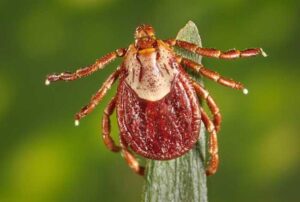
American Dog Ticks: Appearance, Habitat, and Risks to Dogs.
Finding a tick on your dog does not automatically mean your pet has an infection. The important steps are to identify the possible tick correctly, remove it safely, check your dog for other ticks, and understand when veterinary advice is appropriate. Regional differences matter too: a tick found in the southeastern United States may not be the same species commonly encountered in the Northeast or western states.
Key Takeaways: What Dog Owners Should Know
- Appearance: Adult American dog ticks are usually brown or reddish-brown with pale or silvery markings on their back plates.
- Habitat: They are associated with grassy areas, scrub, woodland edges, fields, and trails where potential animal hosts travel.
- Distribution: D. variabilis is widely distributed east of the Rocky Mountains, with limited records farther west. The related species D. similis is recognized separately in western areas.
- Health risks: American dog ticks can transmit pathogens associated with Rocky Mountain spotted fever and tularemia.
- Best response: Remove an attached tick promptly and carefully, record the exposure, monitor your dog, and ask a veterinarian about region-appropriate prevention.
Useful item to keep at home: Fine-tipped tweezers or a purpose-made tick-removal tool. These help with removal but do not prevent future bites.
1. Understanding the American Dog Tick
The American dog tick is a hard tick belonging to the genus Dermacentor. Ticks are arachnids, related to spiders and mites, rather than insects. They feed on blood and pass through four life stages: egg, larva, nymph, and adult.
Adult American dog ticks often feed on larger mammals, including dogs and people. Larvae and nymphs typically use smaller mammals as hosts. The tick’s life cycle and survival depend on environmental conditions and access to suitable hosts, so the timing and location of encounters can differ across the country.
The name can cause confusion. The American dog tick is not the same species as the brown dog tick, which is particularly notable for its ability to infest kennels and homes. Both can bite dogs, but their appearance, behavior, distribution, and disease associations are not identical.
Common Name vs. Scientific Name
For the American dog tick, the scientific name is Dermacentor variabilis. Older resources may describe western populations differently because Dermacentor similis was recognized as a separate species in 2021. When reading older range maps, check the publication date and current CDC guidance.
2. What Does an American Dog Tick Look Like?
The most useful visual clue is the ornate pattern on the tick’s hard back plate, known as the scutum. Adult American dog ticks are generally reddish-brown with pale gray or silvery markings. Their appearance can change substantially after feeding, and males and females have different patterns of body coverage.
Features to look for
- Color: Brown to reddish-brown, with light markings on the back plate.
- Body shape: Relatively flat before feeding; an adult female can become swollen after a blood meal.
- Legs: Adults and nymphs have eight legs. Larvae have six.
- Pattern: Pale, ornate markings are characteristic of adult Dermacentor ticks, but they do not by themselves confirm the species.
- Attachment: The tick may be found anywhere on the dog, with the head, neck, ears, and back among the places worth inspecting carefully.
Why size is not enough
Ticks change in size as they develop and feed. A tiny tick may be an immature stage, while a much larger one may be an engorged adult female. Several species overlap in size, so judging by size alone is unreliable.
Can a phone photo identify the species?
A sharp photograph can help a veterinarian or tick-identification service narrow down the possibilities. Photograph the tick from above with good lighting and, if possible, a scale beside it. Do not crush the tick or handle it with bare fingers. Some closely related species require examination of features that a phone photograph may not reveal.
For a broader identification guide, visit PetGrommer’s 8 Types of Ticks on Dogs: How to Identify Them. Check the destination in WordPress before publishing if your permalink has changed.
3. Where Do American Dog Ticks Live?
According to the CDC, D. variabilis is widely distributed east of the Rocky Mountains and has been documented in limited areas to the west. The western species D. similis is recognized separately. Current distribution maps are based on surveillance and collection records, so a county without an established-population label should not be interpreted as a guarantee that no tick has ever been found there.
American dog ticks are commonly associated with grassy fields, scrubland, woodland edges, trails, and areas with relatively open vegetation. They can be encountered along paths where dogs walk and where wild or domestic mammals move through the environment.
Regional considerations for U.S. dog owners
| Region | What to consider |
|---|---|
| Northeast and Mid-Atlantic | American dog ticks may occur alongside blacklegged ticks and other species. Do not assume every tick found on a dog is an American dog tick. |
| Southeast | American dog ticks, lone star ticks, and brown dog ticks may be relevant depending on the location and habitat. Local disease risks differ. |
| Midwest and central states | American dog ticks are established in many areas. Fields, grassy margins, and trail edges can be exposure sites. |
| Rocky Mountain and western states | Species identification is particularly important because other Dermacentor ticks occur in the region and D. similis is recognized in western areas. |
| Southwest | Brown dog ticks are important in some areas and can establish indoor infestations. Their presence should not be confused with the typical outdoor ecology of American dog ticks. |
These are broad regional considerations, not a state-by-state risk diagnosis. Tick distribution and pathogen activity can differ within a state and change over time. Check the CDC’s current American Dog Tick Surveillance map when assessing a particular county or travel destination.
Important: A Range Map Is Not a Safety Guarantee
Tick records can be incomplete. A species may be found outside its established range, and a tick’s presence does not automatically mean that a particular pathogen is circulating there. Consider the local environment, the dog’s activities, and veterinary advice together.
4. When Are American Dog Ticks Most Active?
Adult American dog ticks are especially associated with spring and summer activity. The precise timing varies with regional weather, habitat, and the availability of animal hosts. The CDC identifies spring and summer as periods of higher risk for human bites from this species.
Do not rely on a single seasonal cutoff. Local conditions can shift tick activity, and dogs may encounter other tick species with different seasonal patterns. If your dog spends time outdoors in tick habitat, maintain a consistent prevention and inspection routine suited to your area.
Where should you check your dog after a walk?
- Around and inside the outer folds of the ears.
- Under the collar and around the neck.
- Across the head, shoulders, and back.
- Between the toes and around the feet.
- In the armpits and groin.
- Under the tail and around other skin folds.
Use your fingers to part the fur gently and examine the skin. A brush or comb may help you inspect the coat, but a comb is not a substitute for carefully checking the skin for attached ticks.
5. American Dog Tick vs. Other Common Ticks
Several tick species can attach to dogs in the United States. The following comparison offers general clues, not a definitive identification key.
| Species | Appearance clues | Habitat or distribution | Why it matters |
|---|---|---|---|
| American dog tick Dermacentor variabilis |
Brown or reddish-brown with pale, ornate markings on the back plate. | Widely distributed east of the Rocky Mountains; limited records farther west. | Can transmit pathogens associated with Rocky Mountain spotted fever and tularemia. |
| Brown dog tick Rhipicephalus sanguineus group |
Generally brown, without the same conspicuous ornate pattern seen on adult American dog ticks. | Worldwide; can establish infestations in homes and kennels. | Associated with Rocky Mountain spotted fever in parts of the southwestern United States. |
| Blacklegged tick Ixodes scapularis |
Adult females often have a reddish-orange body with a dark shield; legs are dark. | Parts of the eastern and upper Midwestern United States, with regional variation. | Important in Lyme disease transmission and other tick-borne infections. |
| Lone star tick Amblyomma americanum |
Adult females commonly have a distinct pale spot on the back; males may have pale markings around the edge. | Common in parts of the eastern, southeastern, and central United States. | Associated with several pathogens and other tick-related health concerns. |
| Rocky Mountain wood tick Dermacentor andersoni |
Can resemble other ornate Dermacentor species. | Rocky Mountain region and parts of western North America. | Accurate identification may require close examination of anatomical features. |
The key difference between American and brown dog ticks
American dog ticks are commonly associated with outdoor environments such as fields, scrub, and grassy woodland edges. Brown dog ticks are particularly notable because they can complete their life cycle around dogs and infest indoor spaces such as kennels and homes.
If ticks repeatedly appear inside your house, do not assume they are American dog ticks. Ask your veterinarian or a qualified pest professional to help identify the species and determine whether an indoor infestation is present.
The CDC provides a helpful comparison in its Where Ticks Live guide.
6. What Diseases and Health Risks Are Associated With American Dog Ticks?
American dog ticks can transmit pathogens associated with Rocky Mountain spotted fever and tularemia. A bite does not prove that a tick carried a pathogen or that the dog became infected. The appropriate response depends on the dog’s condition, the exposure circumstances, and local disease risks.
Rocky Mountain spotted fever
Rocky Mountain spotted fever (RMSF) is caused by the bacterium Rickettsia rickettsii. American dog ticks are one of the recognized tick vectors. The illness is particularly important because it can become severe in people and can also affect dogs.
Possible signs in an ill dog may include fever, reduced appetite, unusual tiredness, weakness, painful movement, or other changes in health. These signs are not specific to RMSF and can occur with many conditions, so a veterinarian must assess the dog rather than relying on the tick’s appearance alone.
Tularemia
Tularemia is caused by the bacterium Francisella tularensis. It can affect people and animals and is associated with several exposure routes, including certain tick bites and contact with infected animals. If your dog becomes unwell after possible tick exposure, tell your veterinarian about the tick and where the exposure occurred.
Skin irritation and heavy infestations
A tick attachment can cause localized irritation. Scratching or chewing can make the skin injury worse. A large number of feeding ticks may cause substantial blood loss, particularly in small, young, or already unwell animals.
Some tick species can cause complications beyond local irritation. That is another reason not to identify a tick based on size alone or to assume that every tick found on a dog belongs to the same species.
Warning Signs That Need Veterinary Attention
- Fever, unusual tiredness, or loss of appetite.
- New weakness, changes in walking, or marked discomfort.
- Increasing swelling, redness, pain, or discharge at the bite site.
- Unexplained bruising or bleeding.
- Many ticks attached to the dog.
- Collapse, severe weakness, or pale/white gums, which require urgent veterinary care.
These signs do not confirm a tick-borne disease. They are reasons to obtain appropriate veterinary assessment.
Can an American dog tick affect people too?
Yes. Adult American dog ticks can bite people as well as dogs and other larger mammals. If you discover a tick on yourself, remove it carefully and consult a healthcare professional if you develop symptoms or are concerned about exposure. Severe or worsening illness after a possible tick bite requires prompt medical assessment.
7. How to Remove an American Dog Tick From Your Dog
Prompt, careful removal is preferable to waiting for a tick to detach. Use fine-tipped tweezers or a purpose-made tick-removal tool, and avoid squeezing the tick’s body.
What you need
- Fine-tipped tweezers or a tick-removal tool.
- Disposable gloves if available.
- A sealed container or other safe method of disposal.
- Soap and water for handwashing.
Removal steps
- Keep the dog still. Have someone help gently hold the dog if necessary. Do not attempt a difficult removal if the dog is distressed or may bite.
- Part the fur. Expose the tick and the point where it enters the skin.
- Grip close to the skin. With fine-tipped tweezers, grasp the tick as near to its mouthparts as you can without pinching your dog’s skin.
- Pull steadily. Apply slow, even pressure. Avoid crushing the tick, jerking sharply, or twisting ordinary tweezers. If using a specialist tool, follow its own instructions.
- Check the bite site. Do not dig into the skin if a small fragment appears to remain. Seek advice if removal is difficult or the site becomes increasingly inflamed.
- Dispose of the tick safely. Place it in a sealed container or follow a recommended disposal method. Avoid crushing it with bare fingers.
- Clean up and record the exposure. Wash your hands, clean the tool, and note the date and where on the dog the tick was attached.
- Inspect the rest of the dog. One tick does not mean there are no others.
Do Not Use These Tick-Removal Tricks
- Do not burn a tick with a match or heated object.
- Do not coat an attached tick with petroleum jelly, nail polish, essential oils, or other substances to force it to detach.
- Do not squeeze or crush its swollen body.
- Do not dig into your dog’s skin to retrieve mouthparts.
- Do not use household pesticides or human insect repellents on your dog unless the product is specifically labelled for that animal and use.
If the tick is near the eye, deep inside an ear, or in another sensitive location, ask a veterinarian to remove it if you cannot do so safely.
For additional instructions and removal precautions, see How to Remove Ticks From Dogs Safely: A Step-by-Step Guide.
8. How to Reduce Your Dog’s Risk of American Dog Ticks
Tick prevention should combine a suitable preventive product, regular checks, and practical exposure reduction. No single measure guarantees that a dog will never encounter a tick.
Choose a preventive with veterinary guidance
Dog tick preventives include oral medicines, topical products, and certain collars. Their ingredients, duration, coverage, minimum age, and safety warnings vary. Ask your veterinarian which option is suitable for your dog’s age, weight, health, lifestyle, and local tick species.
Use a product only as directed. Do not apply extra doses because you found a tick, combine products without veterinary advice, or assume that a product labelled for one species is safe for another. Some dog products can be dangerous to cats.
Inspect after walks and outdoor play
Check your dog’s coat and skin after visits to grassy trails, fields, brush, and woodland edges. Pay particular attention to the head, ears, neck, collar area, feet, armpits, groin, and area under the tail. Continue checks even if your dog receives preventive treatment.
Make the yard less inviting to ticks
- Keep grass reasonably short in areas where your dog spends time.
- Manage excess brush and leaf litter near frequently used paths and play spaces.
- Where practical, separate play areas from dense vegetation and wildlife pathways.
- Inspect your dog after contact with areas frequented by deer or other wildlife.
- Use environmental pest-control products only according to their labels and local requirements.
Review your plan if you keep finding ticks
Repeated tick encounters may mean the dog is exposed to a high-risk environment, the preventive is not being used correctly, or the product does not adequately cover the species involved. Ask your veterinarian to review the plan rather than adding doses or combining products yourself.
A Practical Weekly Tick-Prevention Routine
- Check that your dog’s preventive is current and appropriate.
- Inspect the coat after outdoor activity.
- Remove any attached tick carefully.
- Clean and store your removal tool where you can find it.
- Record repeated exposures and report them to your veterinarian.
For product-selection context, visit Best Flea and Tick Prevention for Dogs and Recommended Tick Sprays for Dogs.
9. Five Useful Products for American Dog Tick Care
These five products serve different purposes: removing attached ticks, inspecting the coat, and organizing supplies. They are not interchangeable, and none replaces veterinary advice.
Product 1: Fine-Tipped Tick-Removal Tweezers
Fine-tipped tweezers allow a dog owner to grasp a tick close to the skin. Choose a precise tip and a comfortable grip so you can control the pressure while removing a tick.
Pros
- Compact and reusable.
- Useful for grasping small ticks near the skin.
- Easy to store with other pet first-aid supplies.
Cons
- Requires steady hands and correct technique.
- May be difficult to use on a moving dog or in a sensitive area.
Best use: A basic tick-removal tool for a home pet-care kit.
Product 2: Tick-Removal Hook or Tick Twister
A purpose-made tick-removal tool can be useful for owners who prefer a device designed specifically for tick removal. Designs vary, so follow the instructions supplied with the selected tool rather than assuming every model works the same way.
Pros
- Small and easy to carry on walks or trips.
- Designed specifically for removing attached ticks.
- Some kits include more than one tool size.
Cons
- The correct technique depends on the design.
- May be unsuitable for a tick in a sensitive or hard-to-reach location.
Best use: A dedicated alternative to ordinary tweezers.
Product 3: Tick Key or Pocket Tick Remover
A pocket-sized tick remover can be convenient for walks, hikes, camping, and travel. Select a design that suits your dog’s size and the ticks likely to be encountered, and learn how to use it before you need it.
Pros
- Easy to carry with a leash or outdoor supplies.
- Can provide a dedicated removal option away from home.
- Usually takes up little storage space.
Cons
- Some designs are less convenient for very small ticks or awkward attachment sites.
- Does not prevent tick bites or replace careful inspection.
Best use: A portable backup for outdoor activities.
Product 4: Dog Flea-and-Tick Comb
A fine-toothed pet comb can help part and inspect the coat, especially on dogs with longer or thicker fur. Use it as an inspection aid rather than assuming it will remove every attached tick.
Pros
- Useful for routine coat inspection and grooming.
- Can help expose small debris or parasites hidden in fur.
- Reusable and simple to store with grooming supplies.
Cons
- Cannot reliably remove ticks attached firmly to the skin.
- May snag long or matted fur if used carelessly.
- Does not replace a veterinary preventive.
Best use: Coat inspection as part of regular grooming.
Product 5: Dog-Specific Tick Spray
A tick spray may be useful in some prevention plans, but only if the selected product is specifically labelled for direct use on dogs and appropriate for the dog’s age, weight, and health. Some sprays are designed for environmental use only and must never be applied to an animal.
Pros
- Can be convenient when the label supports the intended use.
- May complement a broader prevention plan if a veterinarian recommends it.
- Different formulations may suit different situations.
Cons
- Ingredients, effectiveness, duration, and application instructions vary.
- Some products are not safe for puppies or particular household pets.
- Should not be combined with other preventives without checking with a veterinarian.
Best use: Only when the exact product label and veterinary advice support its use on your dog.
Product Safety and Affiliate Disclosure
Never apply an environmental pesticide to a dog unless its label explicitly authorizes that use. For medicated tick prevention, ask your veterinarian which product is appropriate for your pet.
10. Pros and Cons of Common Tick-Control Methods
Tick control works best when owners understand what each method can and cannot do. A removal tool deals with an attached tick; a preventive is intended to reduce parasite risk; and yard management can reduce some exposure opportunities.
Veterinarian-recommended preventives
- Pros: Can provide ongoing protection when correctly selected and used on schedule. Options differ, allowing a veterinarian to consider the dog’s needs and local risks.
- Cons: Product coverage, duration, precautions, and suitability vary. Some treatments require a prescription, and not every product works the same way.
Manual tick checks and removal tools
- Pros: Help owners find visible ticks and remove attached parasites promptly.
- Cons: Do not prevent exposure, and very small ticks may be missed in thick fur.
Yard and habitat management
- Pros: May reduce contact with some tick habitats near regularly used outdoor spaces.
- Cons: Cannot guarantee a tick-free yard, especially near wildlife habitat or adjoining unmanaged land.
Environmental pest control
- Pros: May help address a confirmed environmental infestation when a suitable plan is used.
- Cons: Requires careful product selection and label compliance. It may be unnecessary for some homes and can create risks if misapplied.
The most appropriate combination depends on your dog’s lifestyle, the local tick species, and veterinary advice.
11. When Should You Contact a Veterinarian?
Arrange veterinary help if a tick is attached close to the eye, deep in the ear, or in another area where safe removal is difficult. Contact your veterinarian if your dog has numerous ticks, is very young or medically vulnerable, or develops increasing redness, swelling, pain, or discharge around a bite.
Seek prompt advice if your dog becomes unusually tired, loses its appetite, develops a fever, appears weak, or has new difficulty walking after possible tick exposure. Collapse, severe weakness, or pale gums warrant urgent veterinary care.
When you contact the clinic, explain where the tick was found, when you noticed it, whether the dog is receiving a preventive, and whether symptoms have developed. If you have kept the tick, ask whether the veterinarian would like to examine it.
Tick-borne disease cannot be diagnosed reliably from appearance alone. A veterinarian will decide whether examination, testing, or monitoring is appropriate.
12. Frequently Asked Questions
What is the easiest way to identify an American dog tick?
Adult American dog ticks are generally reddish-brown with pale or silvery markings on the back plate. This is a useful clue, not a definitive test, because related species can look similar.
Where are American dog ticks found?
The CDC describes D. variabilis as widely distributed east of the Rocky Mountains, with limited records farther west. Western populations also include the separately recognized species D. similis. Use current surveillance maps for county-level context.
Are American dog ticks dangerous to dogs?
They can irritate the skin and, in heavy infestations, contribute to blood loss. They can also transmit pathogens associated with Rocky Mountain spotted fever and tularemia. Finding a tick does not mean the dog has been infected.
Can American dog ticks live indoors?
American dog ticks are usually associated with outdoor habitat. Brown dog ticks are much more notable for establishing infestations in homes and kennels. Repeated indoor findings should be investigated rather than identified by location alone.
What time of year are American dog ticks active?
Adults are commonly encountered during spring and summer, although local weather and habitat affect activity. Keep up prevention and inspections according to local risk and veterinary advice.
What is the difference between American dog ticks and brown dog ticks?
Adult American dog ticks typically have pale, ornate markings and are associated with outdoor habitats such as fields and brush. Brown dog ticks are generally brown and can establish infestations indoors. A close examination may be needed to confirm the species.
Should I take my dog to the vet after every tick bite?
Not every tick bite is an emergency. However, contact your veterinarian if removal is difficult, many ticks are attached, the dog is medically vulnerable, or any concerning symptoms develop. Ask about local disease risks and prevention.
Can I use essential oils to repel American dog ticks?
Do not assume essential oils are safe or effective for dogs. Concentrated oils can irritate the skin or cause toxicity depending on the ingredient and exposure. Ask your veterinarian before using them on your pet.
Why does my dog still get ticks while using a preventive?
Some products do not prevent every tick from attaching. Other explanations include heavy exposure, incorrect application, missed doses, or a product that does not cover the tick species involved. Do not apply an extra dose without veterinary guidance.
What should I do if I cannot identify the tick?
Remove it safely if you can, photograph it clearly, and record where and when it was found. Ask your veterinarian or a recognized tick-identification service for help if identification would affect your next steps.
Conclusion: Recognize the Tick, Respond Carefully, and Prevent Future Exposure
The American dog tick is an important species for U.S. dog owners to recognize. Its ornate markings provide a useful visual clue, but other ticks can look similar. Its distribution is broad, and local exposure and disease risks vary.
If you find one on your dog, remove it carefully, check the rest of the coat, and monitor your pet for changes in health. Use a veterinarian-recommended prevention plan and consult current regional guidance rather than relying on a tick’s appearance or a national map alone.
Your Action Plan
- Check your dog carefully after exposure to tick habitat.
- Use tweezers or a suitable removal tool to remove an attached tick safely.
- Record the exposure date and location.
- Watch for signs of illness and contact your veterinarian when concerned.
- Review prevention choices for the tick species found in your region.
Explore more from PetGrommer:
Further Reading.
- Centers for Disease Control and Prevention: American Dog Tick Surveillance — distribution and species clarification.
- CDC: Where Ticks Live — species distribution and disease associations.
- CDC DPDx: Ticks — identification features and medical importance.
- Merck Animal Health: American Dog Tick — identification, hosts, and habitat.
- Companion Animal Parasite Council: Ticks — veterinary parasite guidance.
- Ticks Infesting Dogs and Cats in North America: Biology, Geographic Distribution, and Pathogen Transmission — scientific review.
Recent Content
Lone Star Ticks on Dogs: How to Identify, Remove, and Prevent Them.
Lone star ticks on dogs can be difficult to spot, especially when they attach around the ears, neck, face, or other areas covered by fur. These blood-feeding parasites can irritate your dog's skin,...
Locating a small brown tick crawling across your dog's coat or attached to its skin can be worrying. One possible culprit is the brown dog tick, a tick species particularly associated with dogs and...