Lone star ticks on dogs can be difficult to spot, especially when they attach around the ears, neck, face, or other areas covered by fur. These blood-feeding parasites can irritate your dog’s skin, and some ticks can transmit disease. Learning how to identify a lone star tick, remove it safely, and reduce future exposure can help you protect your dog throughout tick season.
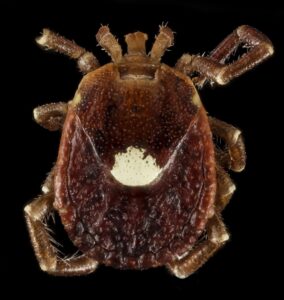
Lone Star Ticks on Dogs: How to Identify, Remove, and Prevent Them.
Quick Answer: What Does a Lone Star Tick Look Like on a Dog?
- Adult female: Usually reddish-brown, with one distinctive pale or white spot on the back.
- Adult male: Reddish-brown, with pale markings around the body margins rather than one obvious central spot.
- Nymph: Small, reddish-brown, and difficult to identify without magnification.
- After feeding: The body may become swollen and grayish or lighter in color.
- Where to check: Around the ears, head, neck, collar line, armpits, groin, between the toes, and under the tail.
Important: A tick’s appearance alone cannot tell you whether it is infected. If you are unsure of the species, save a clear photograph and ask your veterinarian for identification guidance.
Table of Contents
- What is a lone star tick?
- How to identify a lone star tick on a dog
- Where lone star ticks attach to dogs
- Are lone star ticks dangerous to dogs?
- Signs to watch for after a tick bite
- How to remove a lone star tick safely
- How to prevent lone star ticks on dogs
- Useful tick-removal and prevention products
- How to reduce ticks around your home
- Frequently asked questions
What Is a Lone Star Tick?
The lone star tick, scientifically known as Amblyomma americanum, is a hard-bodied tick found across much of the eastern, southeastern, and midwestern United States. Its range varies by location, and established populations may expand over time.
These ticks can feed on a variety of animals, including mammals and birds. Dogs may encounter them while walking through wooded areas, tall grass, brush, leaf litter, or vegetation along trails and property boundaries.
Although the name is associated with the adult female’s distinctive white spot, the mark is not present in the same way on every life stage. This is one reason it is important not to rely exclusively on the white spot when examining a suspected tick.
For broader identification help, read PetGrommer’s guide: How to Identify 8 Most Common Types of Ticks on Dogs.
Where are lone star ticks commonly found?
Lone star ticks are established across large parts of the eastern United States, including many southern and midwestern areas. They are often associated with wooded habitats, brush, and areas where wildlife travels.
Check the CDC’s tick distribution information for current geographic guidance. A tick species’ presence can vary within a state or county.
How to Identify a Lone Star Tick on a Dog
Finding a tick attached to your dog can be alarming, but looking carefully at its size, color, and markings can help you decide what to do next. Do not squeeze the tick or attempt to remove it by burning it or applying chemicals.
1. Look for the adult female’s white spot
The adult female is the easiest life stage to recognize. She usually has a reddish-brown body and one conspicuous white or silvery spot on the upper surface of her back. The spot gives the species its common name.
If the female has fed, her body can become enlarged and change in appearance, making identification more difficult. The spot may be less obvious depending on the tick’s condition and viewing angle.
2. Check for pale markings on adult males
Adult male lone star ticks generally have pale markings around the outer margins of their backs rather than the single prominent white spot typical of the adult female. Because these markings can be subtle, a photograph viewed under magnification may be helpful.
3. Remember that immature ticks may not have the familiar spot
Nymphs are smaller and may look like tiny reddish-brown ticks. They do not display the characteristic white spot of the adult female. Their small size makes them easy to overlook in a dog’s coat.
Don’t identify a tick by color alone
Several tick species can appear brown or reddish-brown. Engorgement can also change a tick’s size and color. The absence of a white spot does not automatically rule out a lone star tick, especially when the specimen is immature or difficult to examine.
If identification matters for veterinary care, take a clear close-up photograph and keep the removed tick in a sealed container if your veterinarian recommends it.
4. Compare it with other ticks found on dogs
Dogs can pick up several different tick species, and their appearance can overlap. Brown dog ticks, American dog ticks, and blacklegged ticks are not interchangeable with lone star ticks. Each species has its own geographic range and disease associations.
Use the PetGrommer guide to the eight most common types of ticks on dogs to compare their general features. A veterinarian or qualified tick-identification service can help when a specimen is unclear.
Where Do Lone Star Ticks Attach to Dogs?
Ticks may attach anywhere on a dog’s body. Some areas are especially worth checking because the skin is thinner, the coat may be less dense, or the tick can be hidden from view.
Your post-walk tick-check routine
- Head and face: Check around the muzzle, cheeks, and eyes without touching the eyeball.
- Ears: Examine the outer ear, ear edges, and the area around the ear opening. Do not insert tools deep into the ear canal.
- Neck and collar: Remove the collar temporarily and inspect the skin beneath it.
- Legs and paws: Check the armpits, between the toes, and around the paw pads.
- Abdomen and groin: Part the fur and examine the skin gently.
- Tail and rear: Look around the tail base and under the tail.
Use your fingertips to feel for small bumps while parting the fur under good lighting. Pay particular attention to long-haired dogs, dark coats, and areas your dog does not like being handled.
If you find a tick on or very close to your dog’s eyelid, avoid trying to remove it with ordinary household tools. Read Tick on Dog’s Eyelid and contact a veterinarian for guidance.
Are Lone Star Ticks Dangerous to Dogs?
A lone star tick can cause local irritation and discomfort while attached to a dog. Any attached tick also deserves attention because tick species differ in the pathogens they can transmit, and identifying the species by appearance is not always straightforward.
The CDC lists several pathogens associated with lone star ticks, including organisms that cause ehrlichiosis in humans. However, that information should not be interpreted as proof that every lone star tick carries a pathogen or that every tick bite causes illness in a dog.
When to take a tick bite seriously
Contact your veterinarian if your dog develops unusual tiredness, fever, reduced appetite, weakness, joint discomfort, or other concerning changes after tick exposure. Seek prompt veterinary care for severe weakness, collapse, difficulty breathing, pale gums, or other signs of an emergency.
Do not wait for symptoms if your dog is already unwell. Your veterinarian can assess the exposure, symptoms, and need for examination or testing.
For general information about tick-borne disease risks and prevention, see the CDC’s tick information. For your dog’s individual risk and treatment, rely on a veterinary professional.
Signs to Watch for After a Tick Bite
Some dogs have mild redness or irritation at the attachment site. Others may show no obvious immediate signs. Symptoms of tick-borne illness can vary and may not appear immediately after exposure.
Watch for changes such as:
- Unusual tiredness or lethargy
- Reduced appetite
- Fever or appearing unwell
- Stiffness, lameness, or reluctance to move
- Swelling, redness, or persistent irritation around the bite
- Unusual bruising, bleeding, or pale gums
- Weakness, loss of balance, or other sudden changes
These signs can have many causes, and they do not confirm a tick-borne disease. Contact your veterinarian if your dog becomes unwell after a tick bite or tick exposure. Tell the clinic when you found the tick, where it was attached, and whether you removed it.
How to Remove a Lone Star Tick From a Dog Safely
If you find an attached tick on your dog, remove it promptly using an appropriate tick-removal tool or fine-tipped tweezers. Avoid crushing the tick’s body or irritating it with heat, petroleum jelly, nail polish, or other substances.
For a more detailed walkthrough, visit PetGrommer’s article: How to Remove Ticks From Dogs Safely: A Step-by-Step Guide.
Step 1: Prepare your supplies
Use fine-tipped tweezers or a tick-removal tool designed for the job. Keep gloves, a clean container with a secure lid, and soap and water or a suitable skin-cleaning product nearby.
Step 2: Part the fur and locate the attachment point
Separate the fur so you can clearly see where the tick’s mouthparts meet the skin. If your dog is distressed or likely to move suddenly, ask another adult to help hold the dog calmly. Do not attempt a difficult removal near the eye or inside the ear canal.
Step 3: Grasp close to the skin
With fine-tipped tweezers, grasp the tick as close to the skin as possible without pinching your dog’s skin. Avoid squeezing the swollen body of the tick.
Step 4: Pull steadily
Pull upward with slow, steady pressure. Avoid jerking, twisting with ordinary tweezers, or crushing the tick. If you are using a specialized tick-removal tool, follow the manufacturer’s instructions because different tools may require different techniques.
Step 5: Clean the area and your hands
After removing the tick, clean the bite area and wash your hands. Follow veterinary advice if the skin looks damaged, the site becomes increasingly inflamed, or you are concerned that part of the tick remains attached.
Step 6: Dispose of or retain the tick safely
Do not crush the tick with bare fingers. Place it in a sealed container if you want to retain it for possible identification or if your veterinarian recommends doing so. Ask your veterinarian about appropriate disposal and whether identification or testing is useful in your circumstances.
When you should not remove a tick yourself
- The tick is attached directly to the eyelid or very close to the eye.
- The tick is deep inside the ear canal.
- Your dog is in severe pain, panicking, or cannot be safely restrained.
- You cannot grasp the tick safely or the attachment site is difficult to see.
In these situations, contact a veterinary clinic for assistance.
How to Prevent Lone Star Ticks on Dogs
Finding and removing ticks is important, but prevention is the better long-term approach. A practical plan combines veterinarian-recommended tick control, regular coat checks, and reducing exposure to tick habitats.
1. Ask your veterinarian about a suitable tick preventive
Tick preventives come in different forms, including oral medications, topical treatments, and collars. The right option depends on your dog’s age, weight, health, lifestyle, other medications, and the tick species found in your area.
Not every product works against every tick species, and products differ in how they act and how often they must be applied. Read the label and ask your veterinarian whether the product covers the ticks relevant to your dog’s location.
Read our related guide: Best Flea and Tick Prevention for Dogs.
2. Check your dog after outdoor activities
Examine your dog after walks, hikes, visits to parks, and time spent in brushy or wooded areas. A tick check is worthwhile even if your dog is using a preventive product, because no preventive method should be treated as a reason to stop inspecting the coat.
3. Keep fur and skin easy to inspect
Regular grooming can make it easier to notice ticks, especially on long-haired dogs. Use a suitable brush or comb, and pay attention to areas where the fur becomes tangled or dense.
4. Be careful in tick habitat
Where practical, keep your dog on maintained paths and away from dense brush, tall grass, and leaf litter. This will not eliminate exposure, but it can reduce contact with areas where ticks may wait for a host.
5. Use tick sprays only when appropriate
Some products are marketed as sprays for dogs or their environment. Check the label carefully to determine whether the product is intended for direct use on dogs, household surfaces, or outdoor areas. These are not interchangeable uses.
Never assume a product is safe for your dog just because it is described as natural. Essential oils and other ingredients can be harmful if used incorrectly. Never apply a product intended for a yard or home directly to your dog unless its label specifically allows that use.
For more information about options, read Recommended Tick Sprays for Dogs.
6. Maintain prevention throughout the relevant season
Lone star tick activity varies with location and weather. In many areas, ticks are active across a substantial part of the year. Ask your veterinarian whether your dog needs year-round protection based on local conditions and lifestyle.
A simple tick-prevention routine
- Daily after outdoor activity: Check the coat and skin for attached ticks.
- On schedule: Give or apply your dog’s preventive exactly as directed.
- During grooming: Inspect the ears, neck, paws, armpits, and groin.
- At home: Keep grass maintained and reduce overgrown vegetation where practical.
- When a tick is found: Remove it safely and monitor your dog for changes in health.
5 Useful Tick-Removal and Prevention Products for Dog Owners
The following products and product categories can help you prepare for tick checks or discuss prevention options with your veterinarian. The links below lead to Amazon search results rather than guaranteed individual listings. Product availability, prices, ingredients, and suitability may change, so check the listing and product label before purchasing.
1. Fine-Tipped Tick Removal Tweezers
Best for: Grasping an attached tick close to the skin.
Fine-tipped tweezers can help you hold the tick near its attachment point without squeezing its body. Choose a sturdy tool with tips that align well and are easy to control.
What to check before buying: Tip precision, grip, durability, and whether the tool is suitable for small ticks.
2. Tick Removal Tool or Tick Removal Kit
Best for: Dog owners who prefer a purpose-designed removal tool.
Tick-removal tools come in different shapes and work according to their individual instructions. A kit may be useful for keeping a tool and small storage container together for walks or travel.
What to check before buying: The tool’s instructions, size options, ease of cleaning, and suitability for use on dogs. Make sure you understand how the particular design should be used.
3. Fine-Tooth Flea and Tick Comb for Dogs
Best for: Routine grooming and checking the coat.
A fine-tooth pet comb can help you part or inspect fur during grooming. It may help reveal debris or parasites that are otherwise difficult to see, but it is not a substitute for carefully removing an attached tick.
What to check before buying: Comfortable handling, durable teeth, and suitability for your dog’s coat type.
4. Veterinary-Recommended Tick Preventive for Dogs
Best for: Ongoing protection as part of an individualized prevention plan.
Oral preventives are one category of products veterinarians may recommend for tick control. The correct product depends on the dog’s age, weight, medical history, and the tick species it needs protection against.
Important: Do not choose a medication based only on a product review or search result. Confirm the product’s label, eligibility requirements, and suitability with your veterinarian before using it.
5. Dog Tick Repellent Spray
Best for: Owners researching labeled topical products that may complement their prevention routine.
Some sprays are formulated for use on dogs, while others are designed for environmental treatment. Always distinguish between these categories. A spray should not replace a veterinarian-recommended preventive unless your veterinarian confirms that it is appropriate for your dog’s needs.
What to check before buying: The intended use, active ingredients, age restrictions, application instructions, warnings, and tick species covered by the label.
Before purchasing any tick product
- Check that it is specifically labeled for dogs if you intend to apply it to your dog.
- Confirm the correct weight range and minimum age.
- Do not combine multiple tick-control products without veterinary advice.
- Never use a dog product on a cat unless its label specifically permits that use; some ingredients used in dog products can be dangerous to cats.
- Read all precautions and instructions before use.
For additional product guidance, see Best Flea and Tick Prevention for Dogs and Recommended Tick Sprays for Dogs.
How to Reduce Lone Star Ticks Around Your Home and Yard
Dogs may pick up ticks in the yard, on neighborhood walks, or during visits to outdoor recreation areas. Making the immediate environment easier to maintain can reduce some opportunities for tick encounters.
Keep grass and vegetation maintained
Mow lawns regularly and trim overgrown vegetation around frequently used outdoor areas. Where practical, keep play spaces separate from dense brush and unmanaged vegetation.
Reduce leaf litter and brush near high-use areas
Clear accumulated leaves and brush where appropriate, especially around paths, patios, and dog exercise areas. Avoid creating piles of yard waste close to spaces where your dog regularly rests.
Think about wildlife activity
Wildlife can carry ticks into residential areas. Where practical, avoid attracting wildlife close to areas where your dog eats, sleeps, or plays. Environmental tick management should follow local guidance and the label instructions for any product used.
Inspect bedding and equipment
After outdoor activity, check your dog’s collar, harness, leash, and bedding for ticks. Wash pet bedding according to its care instructions and keep grooming tools clean.
Seasonal reminder
Do not assume ticks disappear when summer ends. Tick activity depends on the species, location, and weather. PetGrommer’s article, The Autumn Tick Threat: Why Fall Is Peak Season for Dogs, explains why checking your dog remains important during fall.
What If You Find Tiny Ticks or Several Ticks on Your Dog?
Very small ticks can be difficult to see and identify. If you find multiple tiny ticks, check your dog’s entire coat carefully and contact your veterinarian if you are concerned about the number of ticks or your dog’s condition.
Do not assume every tiny tick is a lone star tick. Several species have immature stages that are small and difficult to distinguish. Read Are Seed Ticks Dangerous to Dogs? and The Tiny Ticks Your Dog Could Bring Home This Spring for related information.
Frequently Asked Questions About Lone Star Ticks on Dogs
1. What does a lone star tick look like on a dog?
An adult female usually has a reddish-brown body with one distinct white spot on its back. Adult males have pale markings along the body margins. Nymphs are smaller and do not have the characteristic adult female spot.
2. Can lone star ticks attach to dogs?
Yes. Lone star ticks feed on a range of animal hosts, and dogs can encounter them in areas where the ticks are present. Check your dog’s coat after outdoor activities, especially after time in brush or wooded habitats.
3. Are lone star ticks dangerous to dogs?
They can cause local irritation, and tick bites should be taken seriously because tick species differ in their disease associations. A bite does not automatically mean that a dog has an infection. Contact your veterinarian if your dog becomes unwell after tick exposure.
4. Does every lone star tick have a white spot?
No. The distinctive single white spot is associated with the adult female. Adult males have pale markings around the edges, and immature ticks may not have the familiar marking.
5. How should I remove a lone star tick from my dog?
Use fine-tipped tweezers or a suitable tick-removal tool. Grasp close to the skin and pull steadily according to the tool’s instructions. Avoid squeezing the tick’s body, burning it, or applying substances intended to make it detach.
6. Should I take my dog to the vet after finding a tick?
Contact your veterinarian if the tick is attached in a sensitive area, you cannot remove it safely, your dog has multiple ticks, the bite site becomes increasingly irritated, or your dog shows signs of illness. Your veterinarian can advise whether examination or testing is appropriate.
7. Can I use tick spray instead of a preventive medication?
Not necessarily. Products vary in their ingredients, coverage, and intended use. Ask your veterinarian which approach is appropriate for your dog and the tick species found in your area. Never use a product on your dog unless its label permits that use.
8. Can I prevent all tick bites?
No method guarantees that a dog will never encounter a tick. Using a suitable preventive, checking your dog’s coat, removing attached ticks promptly, and reducing exposure to tick habitat can help reduce risk.
9. Are lone star ticks found throughout the United States?
Lone star ticks are established across much of the eastern, southern, and midwestern United States, but distribution varies by region. Consult the CDC’s tick distribution information for geographic context.
10. What should I do if I find a tick on my dog’s eyelid?
Contact your veterinarian promptly. The eye and eyelid are sensitive areas, and attempting removal with ordinary tweezers can injure your dog. Read Tick on Dog’s Eyelid for additional guidance.
Final Thoughts: Protecting Your Dog From Lone Star Ticks
Lone star ticks can be challenging to identify, particularly when they are immature or have fed. The adult female’s white spot is a useful clue, but not every tick will display the same obvious appearance.
The most practical approach is to check your dog’s coat regularly, remove attached ticks safely, use a veterinarian-recommended preventive, and contact your veterinary clinic if your dog develops concerning symptoms. Paying attention to your dog’s skin and behavior can help you notice problems early.
Your next steps
- Inspect your dog after walks and outdoor play.
- Keep an appropriate tick-removal tool available.
- Discuss a suitable tick preventive with your veterinarian.
- Learn to recognize the common tick species in your area.
- Get veterinary advice if you cannot remove a tick safely or your dog becomes unwell.
For your next read, visit How to Remove Ticks From Dogs Safely: A Step-by-Step Guide.
Recent Content
Locating a small brown tick crawling across your dog's coat or attached to its skin can be worrying. One possible culprit is the brown dog tick, a tick species particularly associated with dogs and...
Engorged Tick on a Dog: How to Identify, Remove, and Prevent It.
An engorged tick on your dog can be alarming, especially when the parasite looks like a swollen gray, brown, or bluish lump attached to the skin. The good news is that you can often remove a single...